
CallGet a free quote

How Red Ear Tracks Calls, Forms, and Booked Jobs for Contractors

A transparent look at how Red Ear measures contractor marketing beyond traffic, using call tracking, form tracking, and booked-job feedback where possible.


By Rob Gillan

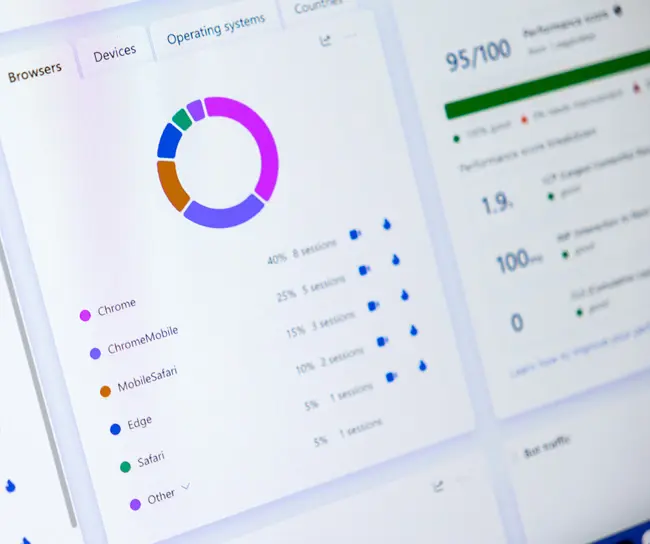
Marketing analytics dashboard

Traffic is not the scorecard we use for contractors

A contractor can have more clicks, more impressions, and even more form activity and still feel no clearer about what is actually driving booked work. That is why we try to measure the marketing system at three levels:

  • lead opportunities like calls and form submissions
  • the campaign, keyword, or page that produced them
  • booked jobs or revenue feedback when the client can provide it

Google says conversion tracking shows what happens after a customer interacts with your ads, including whether they called your business, and helps identify which keywords, ads, ad groups, and campaigns drive valuable customer activity.1 That is the baseline we build from.

We care about calls and forms because they are closer to revenue than traffic is

Google Ads’ conversion-tracking guidance explicitly includes phone-related actions such as calls from ads, calls to a phone number on your website, and clicks on a phone number on your mobile website.1

For contractor accounts, those signals matter because the lead often starts with a phone call or a short request form, not a polished ecommerce checkout. If those moments are invisible, the reporting tends to overvalue shallow metrics and undervalue the parts of the funnel that actually produce work.

In practice, we usually want visibility into:

  • form submissions
  • phone calls from ads
  • phone calls or click-to-call actions from the site
  • the landing pages that produced those interactions

We use that data to improve bidding and page decisions

Google says Smart Bidding uses Google Ads conversion tracking data to help get more conversions at a lower cost, and that advertisers need conversion tracking installed for Smart Bidding to work.2

This is one reason we are picky about what counts as a useful conversion. If the account optimizes around soft signals that do not correlate with real leads, the automation learns the wrong lesson. If it optimizes around calls and qualified inquiries, the campaign has a much better chance of moving toward better outcomes.

We apply the same logic to page decisions. A landing page is not “good” because it looks polished. It is good when it produces the kind of lead the business actually wants.

Team reviewing performance data

Booked-job feedback is where the picture gets honest

Google Ads can help us measure valuable customer actions, but a trades business still needs a way to connect leads to real sales outcomes. When a client can share booked-job feedback, CRM stages, or even disciplined manual notes, we use that to tighten the loop further.

That part is our operating process, not a Google feature. But it is often where the reporting starts becoming useful to an owner instead of merely interesting.

Website planning and content review

The same measurement mindset helps with SEO and GEO too

Google’s guidance on AI features says there are no additional technical requirements beyond the normal Search technical requirements, and that existing SEO fundamentals still matter, including crawlability, internal links, page experience, important content in textual form, and structured data that matches visible text.3 Google’s people-first content guidance also warns against publishing content mainly to attract visits without adding much value.4

OpenAI’s ChatGPT Search help article makes a similar point from a different angle: there is no way to guarantee top placement, but to be included it is important to allow OAI-Searchbot to crawl the site.5

In other words, the tracking mindset and the content mindset support each other. We want pages that are clear enough to rank, useful enough to cite, and measurable enough to improve.

What this means in practice

When we look at a contractor account, we are usually asking a simple sequence of questions:

  • which pages and campaigns are producing calls or forms?
  • which of those leads are actually useful?
  • where is friction making the system underperform?

That is a far better operating rhythm than celebrating traffic spikes that never turn into booked work.

Sources

  1. Google Ads Help: About conversion tracking

  2. Google Ads Help: Smart Bidding

  3. Google Search Central: AI features and your website

  4. Google Search Central: Creating helpful, reliable, people-first content

  5. OpenAI Help Center: ChatGPT search

Call nowGet a free quote